
Security
Security Overview
Security in Haciendas del Conde is primarily dependent upon the security practices in each home and the vigilance of the residents.
Good home security practices include: Keeping your doors and windows locked. Use security lights and a security system. Eliminate situations that invite theft or break-in.
Our Neighborhood Watch programs count on residents to keep a trained eye and ear on their neighborhood, and making their presence known day and night. You should know the name and phone number of the Block Leader in your area.
Immediately report any suspicious activities by calling 911 (in an emergency) or 791-4444 (non-emergency); also inform your Block Leader or a member of the Board of Directors.
Other security-related information includes:
• Fire protection is provided on a subscription basis by Rural-Metro Fire Department.
• The Pima County Sheriff’s Department provides home-security consultation upon request.
• Removal and relocation of poisonous desert creatures (such as rattlesnakes and Gila monsters) is performed by Rural/Metro Fire department.
• Pet bites should be reported to Pima County Animal Care Center.
Neighborhood Watch
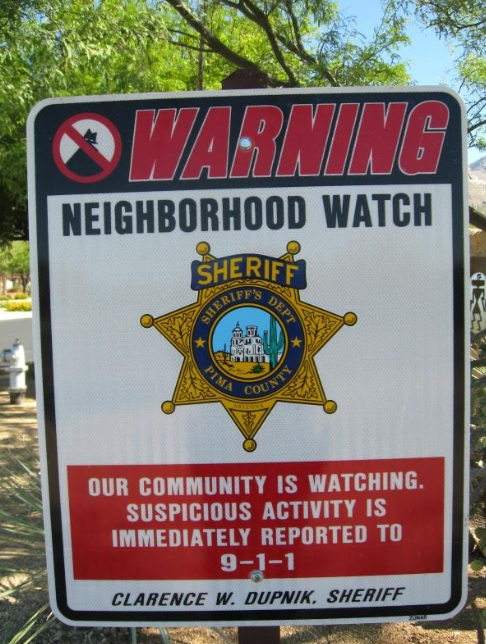
Neighborhood Watch is one of the oldest and most effective crime prevention programs in the country, bringing citizens together with law enforcement to deter crime and make communities safer. The Haciendas del Conde Homeowners Association is an active Neighborhood Watch community, enhancing security through awareness and engaged members.
Three Neighborhood Watch areas cover the Haciendas del Conde:
- One covering Pontatoc Road and Calle del Conde
- One covering Placita del Conde
- One covering Camino del Conde
- Get to know your Neighborhood Watch block and area leaders and learn how you can be an active participant in this program.
Neighborhood Watch Program Principles:
- Get to know your neighbors. Become familiar with neighborhood routines; check out deviations and report to authorities if warranted; keep an eye out when neighbors are absent.
- Show a presence. Activity discourages potential burglars.
- Report out-of-the ordinary occurrences to Sheriff’s non-emergency number or 911. For example: strange vehicles lurking in the street, unusual activity in washes, etc.
- Become informed on how to improve your own security. For example: install and use security systems, security lighting, video cameras; do neighborly check-ins and fix broken windows.
- Maintain official Neighborhood Watch designation from Sheriff’s Department. Benefits include signage at main entrances, priority surveillance, and availability of volunteers to speak at meetings.
- The most important contributor=the individual resident.
- "Keep in mind that Neighborhood Watch groups are not vigilantes.”- Neighborhood Watch Start Guide
Additional Information:
- What are “Blocks” and “Areas”?
- Block: A cluster of 5-15 homes sharing common sight-lines or other bond.
- Area: Several Blocks grouped for administrative purposes; often autonomous.
Block Leader’s responsibilities:
- Be the focal point for the residents of the Block- communications, reporting of occurrences
- Maintain a private list of residents’ preferred-contact phone numbers and email addresses
- Greet newcomers; encourage participation by all residents
- Be the liaison between Area Leader and Neighborhood Watch participants
Area Leader’s responsibilities:
- Be the spokesperson for the area, liaison with the Sheriff’s Department and Association’s Board of Directors
- Schedule annual Area Neighborhood Watch meeting (two the first year).
- Provide written report of meetings to Sheriff’s Neighborhood Watch Unit (including meeting date/time, sign-in roster/ attendance log, topics discussed)
- Coordinate distribution of Watch-related information throughout the Area Provide written notification if Area or Block leader status changes
Resources